How I Built My Travel Fund Without Risking a Dime
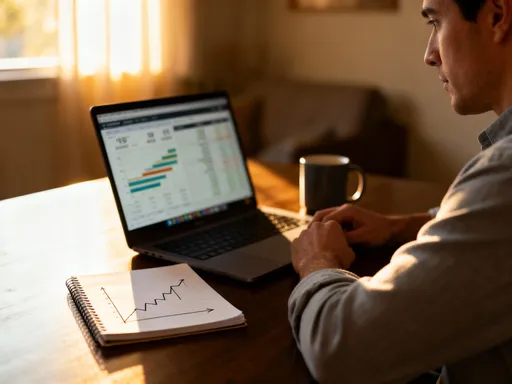
Ever dream of traveling more but keep putting it off because the money’s just not there? I’ve been there—stuck in the “someday” loop, watching others post exotic vacation photos while my savings sat untouched. That changed when I started treating my travel fund like a real financial goal, not a fantasy. This isn’t about get-rich-quick schemes or risky bets. It’s about smart, steady moves—what works, what doesn’t, and how market shifts can actually help you save smarter. Let me walk you through how I did it.
The Mindset Shift: From Wishing to Planning
For years, travel was something I hoped for but never planned. It always seemed too expensive, too far off, or too impractical. I told myself I’d go “when I could afford it,” but that day never came. The turning point came when I realized that if I didn’t make travel a priority, it would remain a distant dream. So, I made a decision: I would treat my travel fund the same way I treated my rent or grocery bill—non-negotiable. This shift in mindset was more powerful than any budgeting trick. Suddenly, saving for travel wasn’t about sacrifice; it was about commitment to a life I wanted to live.
Psychologists often talk about the power of visualization, and I found this to be true in my own journey. I picked a destination—Portugal—and created a vision board with photos of Lisbon’s cobblestone streets, the Douro Valley vineyards, and coastal towns like Sintra. Every time I was tempted to spend on something trivial, I looked at that board. It wasn’t just about the place; it was about the feeling I wanted: freedom, discovery, and renewal. When travel becomes emotionally meaningful, it stops being an indulgence and starts being a necessity for well-being. Studies have shown that experiences bring longer-lasting happiness than material goods, and knowing that gave me even more motivation to stay the course.
Another key part of this mental shift was reframing how I viewed money. Instead of seeing my income as something to be spent first and saved with leftovers, I began to pay myself first—specifically for travel. That meant setting a fixed amount each month, no matter what. Whether it was $50 or $200, that number became sacred. I stopped asking, “Can I afford this trip?” and started asking, “How can I make this trip happen?” That subtle change in language reflected a deeper change in belief: I was no longer waiting for permission from my bank account. I was taking control.
Where to Park Your Travel Cash: Safety First
Once I started saving, I faced a new question: where should I keep the money? My first instinct was to leave it in my regular checking account, but I quickly realized that was a mistake. When the money was too accessible, I was more likely to dip into it for unexpected expenses or impulse purchases. I needed a place that was safe, liquid, and slightly productive. That’s when I discovered high-yield savings accounts. These accounts, offered by online banks and credit unions, provide interest rates significantly higher than traditional banks—often 10 to 20 times higher—without exposing your money to market risk.
I compared several options and chose one with no monthly fees, easy transfers, and FDIC insurance. The interest wasn’t life-changing—around 4% APY at the time—but it was real growth without any effort on my part. For someone saving for a trip within the next 12 to 18 months, this kind of account is ideal. It keeps your principal safe while earning a modest return. I avoided the stock market entirely for this fund because volatility could have wiped out gains just when I needed the money. A 10% market drop right before a trip would have been devastating, and I wasn’t willing to take that risk.
For longer-term goals—say, a dream trip five years out—I considered short-term CDs and money market funds. CDs lock in a fixed interest rate for a set period, which can be smart if rates are high. I used a 12-month CD for part of my fund when rates were peaking, and it gave me peace of mind knowing my return was guaranteed. Money market funds, on the other hand, offer slightly higher yields and better liquidity, though they aren’t FDIC-insured. I used them only for the portion I wouldn’t need for at least two years. The key principle I followed was simple: the closer the trip, the safer the vehicle. Capital preservation always came before return chasing.
Earning While Saving: The Power of Passive Gains
Just because I was avoiding risk didn’t mean I wanted my money to sit idle. I wanted it to work for me, even if quietly. That’s where passive income strategies came in. For the portion of my fund with a longer timeline—over two years—I explored low-volatility dividend-paying ETFs. These funds hold baskets of companies with strong histories of paying consistent dividends, such as utilities, consumer staples, and healthcare firms. I chose ETFs with low expense ratios and a track record of steady performance, not flashy returns.
One fund I used focused on dividend aristocrats—companies that have increased their dividends for at least 25 consecutive years. While the stock market fluctuated, the dividends provided a reliable stream of income that I reinvested automatically. Over time, this created a compounding effect. Even a 3% annual dividend yield, when reinvested, can significantly boost the total value of a fund over several years. The key was discipline: I didn’t check the price every day, and I didn’t panic when the market dipped. I held the investment with a long-term view, knowing that my goal was still years away.
Beyond ETFs, I used micro-saving apps that round up everyday purchases and transfer the difference to a savings account. For example, if I bought coffee for $4.60, the app would round it up to $5 and deposit $0.40 into my travel fund. It sounds small, but over a month, it added up to $15–$20 with zero effort. Some apps even offer bonus matches or interest on the saved amount, making it an effortless way to grow funds. These tools don’t replace serious saving, but they complement it by capturing money that would otherwise go unnoticed.
Reading the Market: When to Move and When to Wait
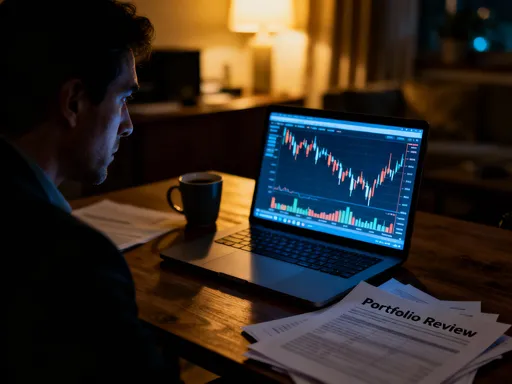
I used to think market awareness was only for investors with six-figure portfolios. But I learned that even small savers can benefit from understanding basic economic trends. One year, I noticed that the Federal Reserve was raising interest rates to combat inflation. That was a signal to lock in higher yields on savings accounts and CDs. I moved a portion of my fund into a 15-month CD offering 4.5% interest—much better than the 1.5% I’d been earning the year before. Timing that move added over $200 to my fund without any extra saving.
Later, when rates began to fall, I shifted strategy. Instead of locking in long-term CDs, I kept more funds in high-yield savings accounts that allowed me to access better rates as they became available. I also paid attention to inflation. If inflation was rising faster than my savings rate, I knew my money was losing purchasing power. That pushed me to find accounts with competitive yields or consider short-term bond funds that adjust with market conditions. I didn’t try to predict the market; I just responded to clear signals.
This isn’t about becoming an economist. It’s about being aware enough to avoid leaving money on the table. For instance, if I had ignored rate changes and left my money in a low-interest account during a period of rising rates, I would have missed out on hundreds of dollars in potential gains. By staying informed through reliable financial news sources and setting up rate alerts, I was able to make small, strategic moves that protected and grew my fund. Knowledge, in this case, was a low-effort, high-reward tool.
Cutting Costs Without Cutting Joy
One of the most effective ways to grow a travel fund is not to earn more, but to spend less on things that don’t matter. I conducted a three-month review of my spending and was shocked by what I found. I was paying for three subscription services I rarely used—streaming platforms, a fitness app, and a meal kit delivery. Together, they cost over $60 a month. That’s $720 a year—enough for a round-trip flight to Europe. I canceled two of them and kept only the one I truly valued.
Dining out was another major leak. I loved trying new restaurants, but I realized I was spending $300 a month on takeout and casual meals. I didn’t want to give up dining out completely, so I set a $100 monthly limit and planned meals around it. I started cooking more at home, using weekly meal plans to reduce waste and impulse grocery buys. This not only saved money but also improved my eating habits. The $200 I redirected each month went straight into my travel fund.
I also explored travel hacking—using credit card rewards to earn points for flights and hotels. I chose a card with a generous sign-up bonus and no annual fee. I used it only for purchases I would have made anyway—groceries, gas, utilities—and paid the balance in full every month to avoid interest. Within a year, I earned enough points for a free round-trip flight and two nights in a hotel. This wasn’t about racking up debt; it was about using a tool wisely. The key was discipline: no extra spending just to earn points, and always paying on time.
Automating Success: Making Saving Invisible
I used to rely on willpower to save, and it failed me every time. Life got busy, unexpected expenses came up, and my savings plans fell apart. The real breakthrough came when I stopped depending on motivation and started building systems. I set up an automatic transfer from my checking account to my high-yield savings account on the day after payday. It was painless because I never saw the money in my main account. Out of sight, out of mind.
I tested different frequencies—weekly, biweekly, monthly—and found that monthly transfers worked best for my budgeting style. I aligned them with my fixed expenses so I could see exactly how much was left for variable spending. I also opened a separate savings account just for travel, giving it a clear name like “Portugal Fund.” This created mental separation. When I saw that account grow, it felt like progress. When friends invited me out and I hesitated, I reminded myself that every dollar saved was a step closer to walking through the streets of Lisbon.
Automation also helped me stay consistent during tight months. Even when money was tight, I kept the transfer running—sometimes at a reduced amount, but never zero. This taught me flexibility without quitting. Over time, the habit became automatic, like brushing my teeth. I wasn’t thinking about saving; I was just doing it. And that, more than any single decision, made the difference.
Staying on Track: Dealing with Setbacks and Temptations
No financial journey is linear. I had to pause my travel fund twice—once for a car repair, once for a family medical expense. In those moments, it was easy to feel discouraged. But I learned that setbacks don’t mean failure. What matters is how you respond. Instead of abandoning the goal, I adjusted the timeline. I recalculated how much I could save each month after the emergency, then updated my target date. Flexibility kept me from giving up.
Temptations were another challenge. Social media was full of luxury vacations and spontaneous trips. Friends would invite me on weekend getaways I couldn’t afford. In those moments, I reminded myself of my vision. I didn’t say “I can’t go”; I said “I’m saving for something even better.” That reframe reduced guilt and kept me focused. I also allowed myself small treats—like a local day trip or a nice dinner—so I didn’t feel deprived. Balance was key.
Celebrating milestones helped too. When I hit $1,000 saved, I took a moment to acknowledge it. I didn’t spend money—just reflected on how far I’d come. These small wins built confidence and kept me motivated. I also shared my goal with a trusted friend who checked in occasionally. Accountability made a difference. Knowing someone else knew about my plan made me less likely to stray.
Your Trip, Your Timeline, Your Rules
Building a travel fund isn’t about perfection—it’s about progress. With the right mindset, smart tools, and a bit of market awareness, you can turn wanderlust into a well-planned reality. It’s not about how much you earn, but how intentionally you save. And when you finally board that plane, you’ll know every dollar was earned with purpose. The journey of saving becomes part of the adventure. You learn discipline, resilience, and the joy of delayed gratification. When I walked through the streets of Lisbon, every cobblestone felt earned. That trip wasn’t a splurge—it was a victory. And the best part? I didn’t risk a dime to get there. Your dream destination is possible. Start where you are, use what you have, and save with intention. The world is waiting.