You Won’t Believe What I Found in Kumasi’s Cultural Heart
Kumasi isn’t just a city—it’s the soul of Ghana. Nestled in the lush south, it pulses with Ashanti heritage, vibrant markets, and stories woven into every drumbeat. If you're chasing culture beyond the surface, Kumasi delivers. I went not just to see, but to feel—and what I discovered transformed how I travel. This is about more than sights; it’s about connection, respect, and knowing how to engage. Let me show you why it matters.
Why Kumasi? The Cultural Epicenter of Ghana
Kumasi stands as the traditional capital of the Ashanti Kingdom, a title that carries deep historical and spiritual weight. Unlike coastal cities shaped by colonial trade, Kumasi grew from centuries of indigenous governance, artistry, and resistance. It remains the beating heart of the Akan people, where language, lineage, and legend are preserved with pride. For travelers seeking authenticity, this city offers something rare: a living culture that isn’t performed for tourists but practiced daily in homes, palaces, and community spaces.
What sets Kumasi apart from other West African destinations is its unbroken continuity. While modern life flows through its streets—buses rumble, shops buzz, children rush to school—the rhythms of tradition remain strong. The Ashanti monarchy still holds influence, not only in ceremony but in mediation, land stewardship, and cultural preservation. Elders pass down proverbs in Twi, drummers speak in complex tonal phrases, and artisans shape wood and cloth with techniques unchanged for generations.
Visiting Kumasi means stepping into a world where heritage isn’t archived behind glass but worn in kente patterns, poured into libations, and danced during festivals. This isn’t a reconstructed village or a staged performance; it’s real life, deeply rooted and vibrantly present. For families, especially women who often serve as cultural keepers at home, Kumasi offers a powerful mirror—reflecting the value of tradition, storytelling, and intergenerational wisdom.
The city’s lush surroundings enhance its spiritual aura. Surrounded by tropical forests and rolling hills, Kumasi feels both grounded and sacred. Its name is said to derive from kɔmase, meaning “under the kum tree,” linking it to a legendary meeting place of early Ashanti leaders. Even today, that sense of gathering—of community in dialogue—lingers in the air. To visit Kumasi is not merely to tour a destination but to witness a civilization that continues to shape itself with dignity and purpose.
Start with the Manhyia Palace: Where Tradition Lives
No journey into Ashanti culture is complete without a visit to the Manhyia Palace, the official residence of the Asantehene, the king of the Ashanti people. This isn’t a museum frozen in time but a functioning seat of authority, where royal decisions are made, disputes are settled, and national identity is affirmed. The current palace, rebuilt in the 1920s after British colonial forces destroyed the original, blends colonial architecture with Ashanti symbolism—a testament to resilience and renewal.
The Manhyia Palace Museum, located on the grounds, offers an intimate look at Ashanti history through regalia, photographs, and ceremonial objects. Among the most revered is the replica of the Golden Stool, a sacred symbol believed to house the soul of the Ashanti nation. According to tradition, the stool descended from the sky into the lap of the first Asantehene, Osei Tutu, uniting the clans under one kingdom. While the original remains hidden for protection and spiritual reasons, seeing the replica evokes a profound sense of awe—an object not of gold alone but of collective memory and unity.
Visitors are welcome during designated hours, typically Tuesday through Saturday, with special access during festivals like Akwasidae, when the Asantehene appears in full regalia to receive homage. These occasions draw thousands, dressed in vibrant kente, singing ancestral songs, and performing choreographed dances. To witness such a gathering is to understand that monarchy here is not a relic but a living institution, binding people across generations.
Etiquette is essential when visiting the palace. Modest dress—covering shoulders and knees—is expected. Photography is permitted in certain areas but prohibited during private ceremonies. Above all, visitors should approach with reverence, not curiosity. A quiet demeanor, a respectful bow, and a willingness to listen speak louder than questions. By honoring these customs, travelers show not just interest but respect—a gesture that opens hearts more than any camera ever could.
Craft Your Own Story at Kejetia Market
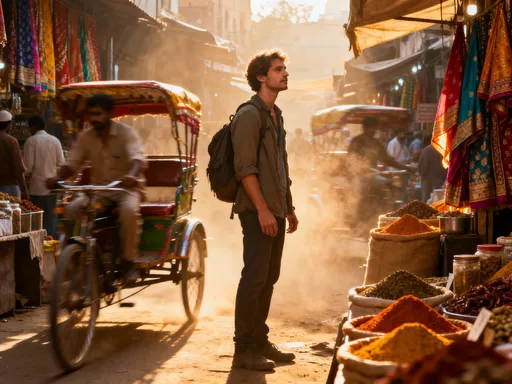
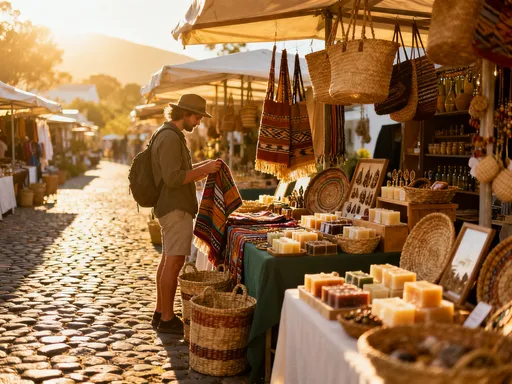
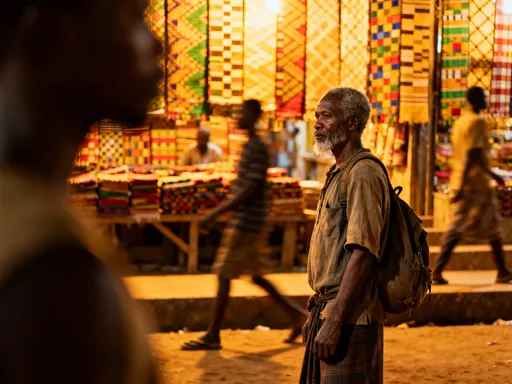
Just a short walk from the palace lies Kejetia Market, the largest open-air market in West Africa and the commercial lifeblood of Kumasi. More than a shopping destination, Kejetia is a sensory symphony: the scent of dried fish and nutmeg, the rustle of stacked kente bolts, the call of vendors announcing prices in rapid-fire Twi. Stalls stretch for blocks, selling everything from hand-carved stools to live chickens, herbal remedies to secondhand clothing. It’s chaotic, yes—but within the noise lies a rhythm, a system only locals fully grasp.
For visitors, navigating Kejetia can feel overwhelming. Yet with patience and presence, it becomes one of the most rewarding cultural experiences in Ghana. Begin by walking slowly, observing more than buying. Notice how women balance baskets on their heads with effortless grace, how traders greet each other with warm proverbs, how children dart between stalls with practiced agility. These moments reveal the true fabric of daily life.
When ready to engage, start with small exchanges—buy a bottle of water, ask the price of a fabric swatch. Many vendors appreciate a smile and a simple “Maakyé” (good morning) in Twi. Haggling is expected, but it should feel like a conversation, not a contest. Offering half the initial price and meeting somewhere in the middle is common, but pushing too hard risks offense. Remember: these goods are not souvenirs; they are livelihoods.
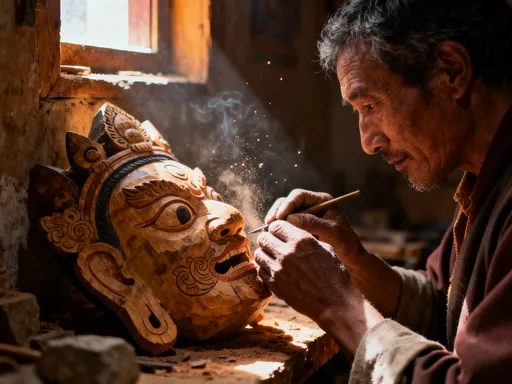
For those seeking authentic crafts, focus on handmade kente, adinkra cloth, or wooden masks. Look for signs of craftsmanship: uneven weaving in kente indicates it was hand-loomed, not machine-made. Adinkra symbols, each carrying a philosophical meaning—like Gye Nyame, “Except for God,” symbolizing faith—are stamped with precision using calabash stamps and natural dyes. Purchasing these items directly from artisans supports local economies and preserves endangered skills.
Kejetia also offers a chance to practice mindful consumption. Instead of buying in bulk, choose one meaningful piece—a small stool for your home, a scarf for a daughter. Attach a story to it: where you found it, who made it, what it represents. That object becomes more than decor; it becomes a bridge between cultures, a reminder of connection.
Uncover Hidden Gems: Off-the-Beaten-Path Cultural Sites
Beyond the palace and market, Kumasi’s deepest treasures lie in its quieter corners—places where tradition unfolds without fanfare. These are not listed in guidebooks, but they offer the most authentic encounters. In villages on the city’s outskirts, elders gather under mango trees to share folktales featuring Anansi, the clever spider who teaches moral lessons. In family workshops, teenagers learn to carve symbolic motifs into wooden stools, their hands guided by grandparents who once learned the same way.
One such experience is attending a community drumming circle. In the neighborhood of Adum or the village of Ahwiaa, known for its woodcarvers, local groups practice traditional rhythms that correspond to specific events—birth, marriage, harvest. Visitors are sometimes invited to sit in, not as performers but as listeners. The drums don’t just make music; they communicate. Each beat carries meaning, a language older than words.
Another hidden gem is the Ntonso Adinkra Village, about 20 kilometers from Kumasi. Here, families have preserved the art of adinkra cloth-making for generations. Tourists can watch the entire process: boiling bark to create dye, carving symbols into calabash stamps, and pressing them onto cotton fabric in rhythmic patterns. Some workshops allow visitors to try stamping their own cloth—a tactile, meditative experience that fosters appreciation for the craft’s precision.
These moments matter because they happen organically. There’s no stage, no ticket, no script. You’re not watching a show; you’re witnessing life. To access them, rely on local connections. Ask your hotel staff, speak with cultural center coordinators, or join community-led tours. The Centre for National Culture in Kumasi often hosts storytelling nights or craft demonstrations open to visitors. These events are low-cost, high-impact, and deeply human.
Seeking out such experiences requires humility. You won’t always be expected; sometimes, you’ll be observed with curiosity. A gentle smile, a willingness to sit and listen, and a respectful distance during private moments go a long way. The goal isn’t to insert yourself into the scene but to witness it with gratitude. In doing so, you honor the people and their right to live their culture on their terms.
The Power of Local Guides: Travel Deeper, Not Just Farther
One decision can transform your entire experience in Kumasi: hiring a local guide. Not a generic tour operator, but someone rooted in the community—someone who speaks Twi fluently, knows the elders, and understands the unspoken rules. A good guide doesn’t just point at objects; they explain their meaning. They tell you why the stool is never placed on the ground, why certain colors are worn during funerals, why drummers pause before playing the king’s rhythm.
I learned this firsthand when I met Kofi, a teacher and cultural historian who grew up in Kumasi. He didn’t rush me through sites. Instead, he began with a question: “What do you want to understand?” When I said, “The heart of Ashanti life,” he took me not to the busiest market stall but to his aunt’s home, where she was preparing a traditional meal. There, over bowls of fufu and light soup, we talked about family, respect, and the role of women in preserving culture. That conversation changed my trip.
Local guides like Kofi are invaluable because they offer context. They explain the symbolism behind kente patterns—how stripes represent history, how colors convey mood. Gold means wealth and status; green stands for growth and harvest. They know which ceremonies are open to visitors and which are private. They can introduce you to artisans, translate conversations, and help you avoid missteps—like wearing red to a mourning event or pointing with your finger, which is considered rude.
Finding a reputable guide is easier than you might think. Many hotels in Kumasi partner with community-based tourism initiatives. The Ghana Tourism Authority also certifies trained guides who adhere to ethical standards. Fees vary, but paying fairly—around $30–$50 per day—is an investment in dignity and sustainability. When you compensate guides well, you support education, family needs, and cultural preservation.
Beyond practicality, local guides foster connection. They remind us that travel is not just about seeing places but meeting people. They challenge the idea of the tourist as a passive observer and invite us to become respectful participants. In a world where mass tourism often flattens culture into clichés, a local guide restores depth, truth, and humanity.
Respect the Rhythm: Understanding Cultural Sensitivity
Traveling in Kumasi requires more than a passport and camera—it demands awareness. Cultural sensitivity isn’t about fear of making mistakes but about intention. It’s about approaching a different way of life with humility, not judgment. Small actions speak volumes: dressing modestly when visiting sacred sites, removing your shoes before entering a chief’s chamber, learning to say “Medaase” (thank you) with sincerity.
One of the most important rules is photography. While snapping pictures of markets or landscapes is generally acceptable, photographing people—especially during ceremonies—requires permission. Some rituals are spiritual, not performative. Capturing them without consent can feel like intrusion. A simple gesture—raising your phone with a questioning look—can open a conversation. Often, people will smile and pose. Other times, they’ll shake their head, and that must be respected.
Dress also matters. In Kumasi, modesty is valued, especially in traditional settings. Women should avoid sleeveless tops, short skirts, or tight clothing when visiting the palace or villages. Wearing kente or cotton prints isn’t appropriation if done respectfully—many Ghanaians appreciate the gesture. But it’s wise to avoid wearing the colors of mourning, like black and red, during festive times.
Language is another bridge. You don’t need to master Twi, but learning a few phrases shows effort. “Wo ho te sɛn?” (How are you?) or “Mo gyefieɛ” (Your home is beautiful) can spark warm exchanges. People respond to genuine interest. When they see you trying, they often respond with patience, laughter, and even invitations.
Perhaps the greatest act of respect is listening. Not just to words, but to silence, to rhythm, to the spaces between. In Kumasi, wisdom is often shared indirectly—through proverbs, stories, or shared meals. To truly receive it, you must slow down. Put away your phone. Sit longer. Let the moment unfold. In that stillness, you’ll find the connection you came for.
Bringing It All Together: A Smarter Way to Experience Culture
My time in Kumasi taught me that travel is not about collecting destinations but about deepening understanding. What I found wasn’t just beautiful scenery or colorful festivals—it was a way of being. A culture that values ancestry, community, and balance. A people who welcome outsiders not to perform but to participate—with respect.
Every element of the journey—the palace, the market, the village workshops, the guidance of locals—came together to form a richer picture. I realized that authentic cultural engagement doesn’t happen by accident. It requires preparation: learning basic customs, choosing ethical tours, supporting local economies. It demands presence: listening more than speaking, observing more than photographing, feeling more than consuming.
For women, especially those who manage households and nurture family traditions, Kumasi offers a quiet resonance. It reflects the power of women as keepers of culture—the grandmothers teaching proverbs, the market queens running businesses, the weavers passing down patterns. It reminds us that tradition isn’t rigid; it’s alive, adaptable, and deeply meaningful when honored with care.
Traveling wisely means rejecting the idea of the world as a backdrop for our photos. It means recognizing that every place has its own heartbeat, its own rules, its own dignity. Kumasi doesn’t need to be “discovered” by the world. It simply asks to be seen—truly seen—for what it is.
So if you go, go not to take, but to receive. Go with questions, not assumptions. Go ready to be changed. Because the greatest souvenir isn’t something you carry home in a bag—it’s the shift inside you, the quiet knowing that you’ve touched something real. Let Kumasi remind you that the world is vast, beautiful, and worthy of deep respect. And let that respect guide your next journey, wherever it may lead.